Ranch Approved is reader-supported. When you buy through links on our site, we may earn an affiliate commission at no extra cost to you. How we test.
Few sights test a cattleman’s resolve quite like finding a newborn calf dropped in a snowdrift during a midnight blizzard. When ambient temperatures plummet below zero and wind chills turn damp amniotic fluid to slush within minutes, a calf’s core body temperature drops precipitously. Wet newborns cannot trap warm air against their skin, burning through their limited brown fat reserves in less than two hours.
Without immediate thermal intervention, hypothermia sets in. Weak calves lose their suckle reflex, miss out on critical maternal colostrum within the vital six-hour antibody absorption window, and either succumb to hypothermia or develop fatal bacterial pneumonia days later.
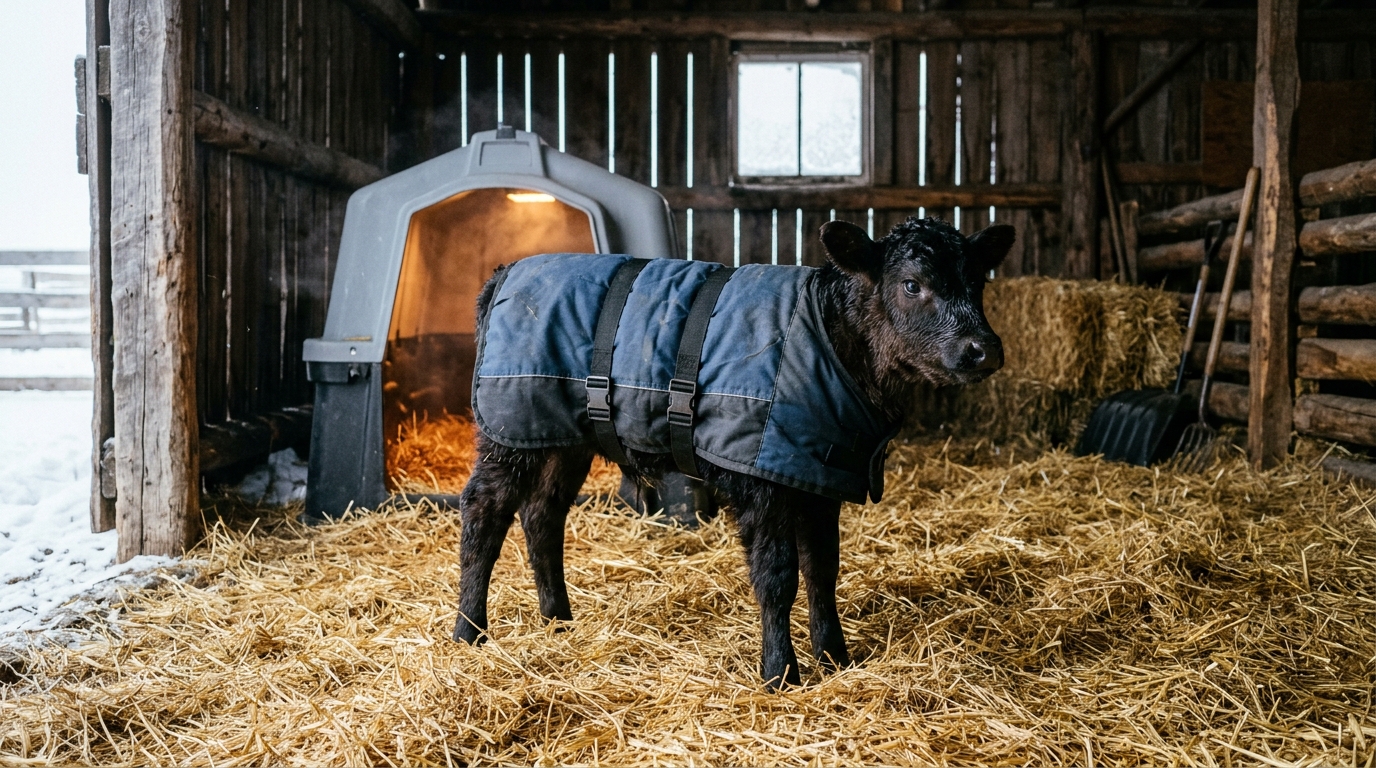
Modern calving management relies on two indispensable pieces of cold-weather equipment: electric calf warming huts (hotboxes) for rapid forced-air hypothermia resuscitation and hair-drying, followed by insulated, waterproof calf blankets that preserve body heat once the dry calf is turned back out with its mother.
Over multiple sub-zero calving seasons on northern ranches, we tested and evaluated the leading calf warming boxes and thermal blankets on the market. Below are our top 3 quick picks, followed by an in-depth comparison table, detailed reviews of all 6 contenders, a clinical guide to diagnosing calf hypothermia stages, and crucial strap-adjustment protocols to prevent navel contamination.
Top 3 Quick Picks
The undisputed gold standard in commercial calf blankets. Engineered with genuine 3M Thinsulate insulation wrapped inside a water-resistant 600D ripstop polyester shell, the Weaver blanket delivers industry-leading warmth-to-weight ratio without absorbing moisture from urine or deep snow. Quick-release front and belly buckles make on-and-off adjustment seamless in freezing conditions.
The benchmark resuscitation hotbox for cow-calf and dairy operations. Molded from indestructible high-density polyethylene with a raised expanded grate floor, it circulates thermostatically controlled 100°F–105°F warm air completely around and under the calf. Dries soaking-wet hair coats to the hide in under 60 minutes while maintaining comfortable respiration.
An outstanding value pick for commercial herds running 50+ head of winter-calving cows. Built with a tough 600-denier waterproof and breathable outer shell packed with 200 grams of polyfill insulation. Features crossed elastic belly straps and adjustable leg straps that stay securely centered on active calves without shifting.
Calf Warming Huts & Blankets Comparison Table
| Product | Type | Insulation / Heat Output | Shell / Material | Key Cold-Weather Feature | Best For | Shop |
|---|---|---|---|---|---|---|
| Weaver 3M Thinsulate Calf Blanket | Thermal Blanket | Genuine 3M Thinsulate | 600D Waterproof Ripstop | Traps radiant heat without bulk; machine washable | All-around commercial beef calves | Check Price |
| Smucker Poly Super-Calf Warmer | Electric Hotbox | Dual-temp fan heater (100°F–105°F) | High-Density Polyethylene | Raised mesh grate floor with 360° warm air vortex | Resuscitating comatose or hypothermic newborns | Check Price |
| Tough-1 600D Insulated Blanket | Thermal Blanket | 200g Polyfill insulation | 600D Waterproof Breathable | Criss-cross belly surcingles & quick-snap chest | Budget-friendly multi-calf replacement packs | Check Price |
| Derby Originals 400g Winter Coat | Thermal Blanket | Ultra-heavy 400g Polyfill | 420D Windproof Nylon | Fleece-lined neck wither pad; deep thermal loft | Sub-zero deep freezes (< -15°F) & sick calves | Check Price |
| Professional’s Choice Calf Blanket | Thermal Blanket | Quilted polyester insulation | Water-repellent breathable poly | Extra-wide contoured tail cutout & heavy nylon straps | High-mobility paddock calves & show stock | Check Price |
| Premier 1 Heated Warming Box | Electric Hotbox | Integrated ceramic / fan heater | Molded poly insulated tub | Clear inspection viewport & removable drop pan | Small farms, twin calves, lambs & goat kids | Check Price |
Detailed Reviews of the 6 Best Calf Warming Solutions
1. Weaver Leather Livestock 3M Thinsulate Lined Waterproof Calf Blanket — Best Overall Calf Blanket
Insulation: Genuine 3M Thinsulate | Shell: 600-Denier Ripstop Polyester | Sizing: Standard (approx. 33” spine length) & Large (36”+)
When selecting a winter calf blanket, bulky synthetic batting often works against you. Heavy batting compresses when the calf lies in straw bedding, destroying its insulating dead-air space, while absorbing damp manure and urine along the lower hem. Weaver Leather solved this problem by partnering with 3M to incorporate micro-fiber Thinsulate lining into their livestock gear.
Thinsulate fibers are roughly one-tenth the diameter of standard polyester fibers, trapping significantly more body heat while maintaining an ultra-thin, lightweight profile. During field trials on newborn commercial Angus and Hereford calves, the Weaver blanket allowed young calves to stand, navigate slippery frozen pasture, and reach the cow’s udder without the encumbering drag of stiff, waterlogged canvas coats.
The exterior shell is constructed from durable 600-denier ripstop polyester coated with a water-resistant finish that sheds sleet, blowing snow, and freezing drizzle. Dual heavy-duty quick-release plastic buckles at the chest and an adjustable elastic belly band keep the blanket positioned squarely over the spine without slipping sideways when the calf beds down.
Pros
- 3M Thinsulate lining provides unmatched thermal retention without cumbersome weight
- Tough 600D ripstop shell resists barbed wire snags and rough barn stall boards
- Contoured belly strap leaves ample clearance for the umbilical cord and naval clamp
- Quick-release acetal buckles operate smoothly even with heavy chore gloves on
- Machine washable and dries rapidly between calves
Cons
- Higher initial investment per blanket than budget multi-packs
- Elastic leg cords require periodic inspection to ensure proper tension as calf grows
2. Smucker’s Super-Calf Warmer / Heavy-Duty Poly Electric Calf Hotbox — Best Commercial Warming Hut
Heating System: 110V 2-speed warm-air circulating fan heater | Cabinet: High-Density Polyethylene | Floor: Raised vinyl-coated steel expanded mesh
Every northern cattle producer has a story about hauling a comatose newborn calf onto the farmhouse bathroom floor or into the cab of a pickup truck with the heater blasting. While that can save a life in a pinch, it poses severe biosecurity concerns and fails to provide uniform bottom-up heat. The Smucker’s Super-Calf Warmer is the purpose-built veterinary solution that belongs in every serious calving barn.
Constructed from virtually indestructible rotational-molded high-density polyethylene, the hotbox features a two-piece clamshell lid that allows a single rancher to gently load a recumbent calf without strain. Inside, a raised expanded mesh floor elevates the calf above wet straw, urine, and melting ice. A heavy-duty, thermostatically protected 110V electric fan heater draws fresh air through bottom vents, heats it to a safe 100°F–105°F, and circulates warm air up through the grate.
Unlike infrared heat lamps—which create dangerous hot spots that can scorch a calf’s skin or ignite bedding—the circulating vortex fluffs the calf’s wet hair coat from the belly outward. In our experience, even soaking-wet newborns dropped in below-zero snow are completely dry, alert, and standing on their own within 45 to 60 minutes.
Pros
- Resuscitates severe Stage 2 hypothermic calves when heat lamps completely fail
- Raised mesh grate keeps the calf elevated above feces, urine, and melting ice runoff
- Gentle convective warm air fluffs and dries damp underbelly hair, drastically reducing pneumonia risk
- Indestructible poly cabinet will not rot, rust, or crack in sub-zero barn environments
- Removable sub-floor and smooth interior walls clean and sanitize easily between calves
Cons
- Substantial initial capital investment; intended for serious cow-calf operations
- Requires dedicated 15A/20A electrical outlet with GFCI protection in the calving barn
3. Tough-1 600D Waterproof Breathable Insulated Calf Blanket — Best Budget Pick for Herd Management
Insulation: 200 Grams Polyfill | Shell: 600-Denier Waterproof/Breathable Ripstop | Closure: Double buckle front, crossed belly surcingles
When you have 30 heifers calving simultaneously during a February cold front, outfitting every newborn in $60 high-end blankets can strain cash flow. Tough-1 engineered this 600D insulated blanket specifically to deliver rugged durability, reliable waterproofing, and substantial warmth at an accessible price point.
Packed with 200 grams of synthetic polyfill, it provides the ideal thermal barrier for dry calves turned out into cold maternity pens or unheated run-in sheds. The 600-denier outer ripstop fabric features a breathable waterproof coating that prevents moisture from soaking in from the outside while allowing excess body heat and sweat to escape—critical for preventing damp, chilled skin during sudden daytime temperature swings.
We particularly appreciate the crossed belly surcingles on this blanket. Unlike single-belly straps that can shift or let the blanket twist around a frolicking calf’s ribs, the crossed pattern hugs the chest and abdomen securely. The leg straps are fully adjustable with sturdy snaps that prevent the hindquarters from blowing open in high pasture winds.
Pros
- Excellent value-to-performance ratio for commercial cow-calf operations
- 200g polyfill insulation provides reliable protection down to 0°F
- Crossed belly surcingles prevent the blanket from shifting or rolling sideways
- Breathable membrane allows sweat to vaporize without trapping moisture against the hide
Cons
- Bulkier polyfill takes longer to air-dry after muddy spring pasture turnouts
- Not recommended for extended torrential rains where polyfill can eventually become damp
4. Derby Originals 400g Heavyweight Winter Calf Coat — Best for Extreme Northern Deep Freezes
Insulation: Ultra-Heavy 400 Grams Polyfill | Shell: 420-Denier Windproof Nylon | Lining: 210D smooth taffeta lining
When ambient temperatures dip past -15°F in northern Montana, the Dakotas, or the Canadian Prairies, standard 200-gram blankets often fail to provide enough thermal loft for small or premature calves. The Derby Originals Heavyweight Calf Coat is built like an arctic expedition parka, boasting a massive 400 grams of high-loft polyfill insulation.
Despite the substantial fill, the interior features a silky 210D nylon taffeta lining that glides smoothly over the calf’s coat without rubbing hair or causing friction galls on prominent shoulder blades. A fleece-lined wither relief pad at the neckline eliminates chafing when the calf drops its head to bed down or nurse.
The 420-denier nylon outer shell acts as an impenetrable windbreak against bitter northern drafts. If you are managing sick calves battling scours or respiratory distress, this blanket delivers the deep thermal therapy needed to keep energy focused on immune defense rather than basic thermoregulation.
Pros
- Massive 400g thermal fill handles extreme sub-zero conditions below -20°F
- Soft fleece wither pad protects sensitive neck skin from chafing
- Smooth taffeta lining will not pull, mat, or rub newborn hair
- Exceptional insulation for sick or scouring calves needing extra heat support
Cons
- 420D shell is slightly less rip-resistant than 600D ripstop polyester
- Too warm for mild winter days (above 35°F); can cause calf to sweat
5. Professional’s Choice Insulated Calf Blanket — Best Tailored Fit for High-Mobility Calves
Insulation: Quilted Polyfill | Shell: Water-Repellent High-Tensile Polyester | Design: Contoured athletic cut
Professional’s Choice is celebrated across the equine and livestock showing worlds for precision anatomical tailoring, and their insulated calf blanket reflects that expertise. Many generic calf blankets fit like rigid rectangular boxes, bunching up over the hindquarters and hindering natural nursing stances. This blanket is custom-contoured along the spine, chest, and flanks to follow the calf’s natural muscular contours.
The tail cutout is deliberately sculpted wide and deep, ensuring that feces and urine discharge cleanly away from the blanket fabric. This single design nuance dramatically reduces bacterial contamination and eliminates the crusty, soiled rear hems common with poorly patterned coats.
The closure hardware utilizes industrial-grade hook-and-loop fasteners reinforced by nylon web straps with sliding metal triglides. For producers raising high-value registered seedstock or show calves that need to stay pristine and energetic, this tailored blanket is a premium choice.
Pros
- Ergonomic contoured patterning moves fluidly with active calves
- Generous tail cutout prevents fecal soiling and rear hem saturation
- Low-profile quilted construction minimizes bulk while trapping core heat
- Reinforced webbing stress points resist tearing during aggressive pasture play
Cons
- Hook-and-loop closures can accumulate straw and loose pasture debris over time
- Requires careful manual sizing for unusually stocky bull calves
6. Premier 1 Heated Warming Box — Best Versatile Hotbox for Small Farms & Twins
Heating System: Controlled electric fan forced-air heater | Cabinet: Impact-resistant structural poly | Ideal For: Calves, lambs, goat kids, and pig litters
For diversified homesteads, smaller family farms, or operations that manage sheep and meat goats alongside commercial cattle, purchasing a massive single-purpose commercial calf hut may not make sense. Premier 1 Supplies designed this compact heated warming box to provide the clinical drying power of an industrial hotbox in a versatile, multi-species footprint.
Featuring an integrated electric heating unit with an internal thermostat, the box gently draws clean barn air across ceramic heating elements and circulates warm air through a raised poly floor. A clear top inspection viewport lets ranchers monitor the calf’s breathing and alertness without repeatedly opening the lid and dumping precious heat into the cold barn.
The interior dimensions comfortably accommodate a single beef or dairy calf, a set of twin calves, or up to four newborn lambs or goat kids simultaneously. A slide-out drop pan beneath the floor catches melting snow and manure fluids, making complete sanitization fast and painless between newborns.
Pros
- Transparent viewport allows visual monitoring without heat loss
- Multi-species versatility handles calves, lambs, goat kids, and litters
- Removable drop tray makes sanitizing and waste removal effortless
- Compact footprint fits easily into standard calving barn alleys and milk houses
Cons
- Slightly tighter interior length for extra-large 100+ lb bull calves
- Requires clean, dry indoor barn location away from blowing outdoor snow
Veterinary Field Guide: Recognizing & Treating Calf Hypothermia
Normal core body temperature for a healthy newborn beef or dairy calf sits between 101.5°F and 102.5°F (38.6°C–39.2°C). Because a wet calf dropped on frozen ground loses body heat through conduction up to 30 times faster than in dry air, hypothermia can progress with alarming speed.
Always keep a digital veterinary thermometer in your calving kit. Measure core temperature rectally, inserting the probe at least two to three inches into the rectum and angling it against the mucosal wall for an accurate reading.
| Stage | Rectal Temp | Clinical Symptoms | Action Required |
|---|---|---|---|
| Stage 1: Mild Hypothermia | 100.0°F – 101.0°F | Vigorous shivering; cold ears, tail tip, and hooves; suckle reflex still present; able to stand. | Towel dry vigorously; fit an insulated blanket (e.g. Weaver 3M); ensure immediate nursing of warm maternal colostrum. |
| Stage 2: Moderate Hypothermia | 95.0°F – 99.9°F | Shivering weakens or stops; suckle reflex absent; unable to stand; stiff limbs; lethargic and glassy-eyed. | Immediate warming hut resuscitation. Place in forced-air hotbox for 60 min; administer warm colostrum or electrolytes via esophageal feeder once core temp passes 100°F. |
| Stage 3: Severe Hypothermia | Below 95.0°F | Recumbent/comatose; pupils dilated; irregular shallow breathing; cardiac arrhythmias; unresponsive. | Veterinary emergency: warm IV fluids (dextrose/saline) + circulating warm-air hotbox. Do NOT feed milk or colostrum orally until swallowing reflex and 100°F temp return. |
[!WARNING] Never tube-feed cold colostrum or milk replacer to a hypothermic calf! When a calf’s core body temperature is below 100°F, blood is shunted away from the digestive tract to protect vital organs. Cold milk entering a cold abomasum will not digest; it will ferment, causing fatal clostridial bloat or abomasitis. Warm the calf internally with hotbox air and warm oral electrolytes first.
Why Forced-Air Warming Huts Outperform Heat Lamps
For decades, the traditional ranch solution for chilled calves was hanging a 250-watt red infrared heat lamp over a small pen of straw. While heat lamps are inexpensive, veterinary research and barn safety data have proven they are both inefficient and dangerous.
- Fire Hazard: Heat lamps are the leading cause of winter barn fires across North America. An agitated cow, a kicking calf, or dust accumulation can shatter hot glass bulbs directly into dry wheat straw in seconds.
- Uneven Radiant Heating: A heat lamp heats only the top layer of hair directly beneath the bulb, often reaching scorching surface temperatures while the calf’s belly and feet remain resting on freezing, damp ground.
- Failure to Dry the Undercoat: The primary factor in hypothermia is moisture. Evaporating water consumes massive amounts of thermal energy. Enclosed warming huts utilize convective forced air that flows underneath the calf’s torso through raised expanded grates, actively fluffing and evaporating water from the dense underfur. Once dry, the hair coat traps natural air pockets, creating an insulative blanket that allows the calf to maintain its own core body heat.
Proper Sizing & Belly-Strap Adjustments for Calf Blankets
Putting a blanket on a calf incorrectly can cause more harm than good. A blanket adjusted too tightly rubs raw sores, while a loose or poorly positioned belly strap can become soaked in urine or tangled around legs.
Follow these four field-tested fitting guidelines:
- Measure from Base of Neck to Tail Head:
- Small / Twin / Jersey Calves: 28 to 30 inches.
- Standard Commercial Beef Calves (75–90 lbs): 32 to 34 inches.
- Large / Bull Calves (95+ lbs): 36 inches or larger. The blanket should cover the entire loin and hip without extending so far past the tail head that it catches manure.
- Maintain Clearance for the Navel: On newborn calves, the umbilical cord is an open highway for bacterial infections (navel ill and joint ill). Ensure that the front belly strap sits well forward of the navel clamp and that crossed belly straps do not rub against the healing cord. On bull calves, check that the strap does not obstruct the urinary sheath.
- The Two-Finger Rule on Leg Straps: Hind leg straps keep the blanket from blowing forward in heavy pasture gales. Adjust the straps so you can easily slide two stacked fingers between the webbing and the calf’s inner thigh. If adjusted too tight, the webbing will gall tender skin; if too loose, the calf can catch a hoof while scratching its ear.
- Remove & Inspect Every 3 to 4 Days: Calves grow at rapid rates during their first two weeks, gaining 1.5 to 2.5 pounds daily. A blanket that fit snugly on day one will become dangerously constricting by day ten. Remove the coat every few days to check for lice, moisture accumulation from sweating, and to readjust straps as the calf expands.
Cold-Weather Calving Barn Checklist
To give your newborn calves the highest survival rate during tough winter conditions, ensure your calving setup includes:
- Calf Warming Hut & Clean Straw: Position your hotbox on a clean concrete pad or raised wooden platform near the calving pens with a dedicated GFCI-protected outlet.
- Dry Thermal Blankets: Keep at least 4 to 6 clean, dry blankets washed and prepped in a clean tote in the tack room.
- Reliable Handling Equipment: When cows experience difficult deliveries or need maternal bonding assistance in the barn, a sturdy calving pen and maternity gate are essential. Review our roundup of the best cattle chutes for small farms in 2026 to evaluate heavy-duty squeeze and head-gate options.
- Permanent Identification: Once the calf is warm, dry, and standing, apply your identification tag immediately to maintain accurate calving dates and vaccination lineage. Check out our field test on the best ear tags and tag applicators in 2026.
- Unfrozen Water for the Dam: Calving cows dehydrate rapidly during labor and can consume 20+ gallons of water immediately after birth. Keeping fresh, ice-free water accessible is crucial; inspect our recommendations for the best stock tank heaters in 2026 to keep maternity troughs open in sub-zero freezes.
The Verdict: Which Calf Warming Setup Should You Buy?
- The Gold Standard Blanket: For everyday commercial cow-calf winter operations, the Weaver 3M Thinsulate Lined Waterproof Calf Blanket is the undisputed choice. Its moisture-repelling ripstop shell and Thinsulate micro-fibers keep newborns warm and dry without encumbering weight.
- The Ultimate Life-Saver: If you calve in sub-zero northern blizzards, an electric commercial hotbox like the Smucker’s Super-Calf Warmer will pay for itself the very first time it revives a frozen, comatose calf that would have otherwise died in the snow.
- The Best Multi-Calf Value: If you need to outfit a large string of winter heifers on a working budget, stock up on the Tough-1 600D Insulated Calf Blanket for dependable, heavy-duty belly-wrap protection.