

As an Amazon Associate I earn from qualifying purchases.
Ranch Approved is reader-supported. When you buy through links on our site, we may earn an affiliate commission at no extra cost to you. As an Amazon Associate I earn from qualifying purchases. How we test.
Providing a consistent supply of clean, fresh water is arguably the single most critical factor for the health, productivity, and profitability of your cattle operation. Without adequate hydration, cattle can suffer from reduced feed intake, lower weight gain, decreased milk production, and increased susceptibility to illness. A well-chosen water trough isn't just a container; it's a vital piece of infrastructure that supports your entire herd.
However, selecting the right water trough for your ranch isn't as simple as picking the first one you see. You need to consider factors like herd size, climate, pasture layout, material durability, ease of cleaning, and overall cost-effectiveness. A trough that works perfectly for a small hobby farm might be completely inadequate for a large commercial cattle operation, and vice-versa.
In this comprehensive Ranch Approved guide, we'll dive deep into the best cattle water troughs available in 2026. We've researched the market, evaluated popular models, and distilled our findings into practical recommendations designed to help you make an informed decision. Whether you're upgrading existing equipment, setting up a new pasture, or expanding your herd, we'll help you find a trough that stands up to the rigors of ranch life and keeps your cattle well-watered.
Our Top 5 Quick Picks
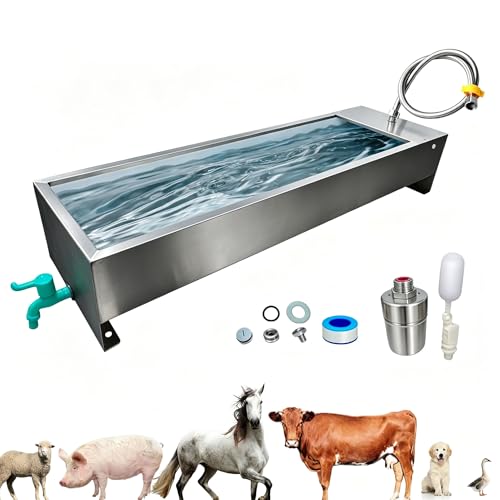
Huge 54L Capacity + Automated Refill with Float: This livestock water trough is up to 1 - meter length(over 3 feet) and 30cm width hold a massive 54 liters, suitable for large livestock or big dog packs. Automatic waterer livestock utilizes the water level height to control the r…
This large-capacity round galvanized tank ensures ample water supply for bigger cattle operations with heavy-duty corrugated steel built to last for decades.
Check Price on Amazon →
A premium oval galvanized tank from a trusted brand, known for its heavy-duty construction and long-lasting performance in tough ranch conditions.
Currently unavailableA budget-friendly galvanized steel round stock tank that holds up to 90 gallons. Heavy-duty zinc coating resists corrosion for years of reliable outdoor use on the ranch or farm.
Currently unavailableA heavy-duty 100-gallon poly oval stock tank built to withstand the demands of daily ranch use. Impact-resistant polyethylene construction with UV protection keeps water clean and accessible for your herd year-round.
Currently unavailableWhat to Look For in a Cattle Water Trough
Choosing the right water trough involves more than just picking a size. Ranchers need to consider several key factors to ensure their investment provides reliable hydration, stands up to the elements, and offers long-term value.
Material Type: Galvanized Steel vs. Polyethylene
The two primary materials for cattle water troughs are galvanized steel and polyethylene (poly). Each has distinct advantages and disadvantages. Galvanized steel tanks are renowned for their strength and longevity. The zinc coating protects the steel from rust and corrosion, making them incredibly durable against livestock abuse and harsh weather. They are heavy, which can be a pro for stability but a con for portability. Poly tanks, on the other hand, are lighter, more flexible, and resistant to dents and punctures. They are also rust-proof and often have smooth interiors, making them easier to clean. However, some poly tanks can become brittle in extreme cold or degrade over time with prolonged UV exposure if not properly formulated.
Your choice of material often comes down to your specific needs. For permanent, heavy-duty installations where extreme durability is paramount, galvanized steel is often preferred. For rotational grazing or situations where lighter weight and impact resistance are key, a high-quality, UV-stabilized poly tank can be an excellent choice. Consider the temperament of your herd; some cattle are rougher on equipment than others.
Capacity and Size: Matching Your Herd's Needs
The capacity of your water trough is critical. A general rule of thumb is that a beef cow will drink 1-2 gallons of water per 100 pounds of body weight per day, with consumption increasing significantly in hot weather or during lactation. For example, a 1,200-pound cow might drink 12-24 gallons daily. You need enough capacity to supply your entire herd between refills, plus a buffer for peak demand and emergencies. Overcrowding around a trough can lead to stress, injuries, and reduced water intake.
Consider the number of animals, their size, and how often you plan to refill the trough. For a small herd of 10-20 cattle, a 100-200 gallon trough might suffice if refilled daily. For larger herds of 50-100, you'll need multiple troughs or a single large tank in the 300-700 gallon range. Round tanks typically offer more drinking space per gallon for multiple animals simultaneously, while oval or rectangular tanks can fit better in specific layouts or against fences. Ensure the trough is deep enough to prevent rapid evaporation but shallow enough for younger animals to reach the water safely.
Durability and Construction Quality
A cattle water trough needs to withstand significant abuse from livestock, weather, and daily ranch operations. For galvanized tanks, look for heavy-gauge steel (e.g., 20-gauge or thicker) and a robust rolled rim that resists bending and crushing. A well-constructed rim also prevents sharp edges that could injure animals. Seams should be tightly sealed and reinforced to prevent leaks. For poly tanks, seek out virgin food-grade polyethylene with UV inhibitors to prevent sun degradation and cracking. The walls should be thick and rigid enough to resist buckling when full and withstand impacts. A strong, stable base is essential for both types to prevent tipping.
Inspect drain plugs and fittings; they should be heavy-duty and securely installed. Flimsy components are often the first point of failure. The overall construction should feel solid and well-finished, indicating a product built to last for many years in a demanding environment. Investing in a higher-quality, more durable trough upfront often saves money and headaches in the long run by reducing replacement costs and maintenance.
Ease of Cleaning and Maintenance
Clean water is paramount for cattle health. Troughs should be designed for easy cleaning to prevent algae, bacterial growth, and sediment buildup. Look for troughs with smooth interior surfaces that don't harbor grime. A large, easily accessible drain plug is a must-have feature, allowing for quick and complete draining. Some troughs feature sloped bottoms towards the drain for more efficient emptying. The size and shape of the trough also impact cleaning; smaller, oval tanks might be easier to scrub by hand than very large, deep round tanks.
Consider how often you'll need to clean based on your water source, climate, and herd size. Troughs in direct sunlight or with stagnant water will require more frequent cleaning. Regular cleaning not only ensures water quality but also extends the life of the trough by preventing corrosive buildup. For more tips on maintaining your water sources, check out our guide on essential cattle fencing tips, as proper fencing can help keep troughs cleaner.
Animal Safety and Accessibility
The safety of your cattle should always be a top priority. Troughs should have smooth, rolled edges to prevent cuts and scrapes, especially around the mouth and nose. The height of the trough is also important; it should be accessible for all animals in the herd, from calves to mature bulls, without requiring them to strain or overreach. A stable, wide base is crucial to prevent tipping, particularly with larger, more boisterous animals.
Avoid troughs with internal bracing or sharp corners that could pose a hazard. If using automatic waterers, ensure the float mechanisms are protected from curious animals. The area around the trough should also be well-drained and free of mud to prevent slips and falls, which can be a significant concern for herd health and hoof integrity. For more on maintaining healthy hooves, see our article on winter livestock care.
Weather Resistance and Climate Considerations
Ranching often means dealing with extreme weather, and your water troughs must be up to the challenge. In freezing climates, galvanized steel tanks can be used with submersible heaters, but poly tanks specifically designed for cold weather are also available. Ensure any heater you use is livestock-safe and properly installed. In hot, sunny climates, UV-stabilized poly tanks are essential to prevent material degradation. Galvanized tanks handle sun well, but water can heat up more quickly in metal tanks, potentially reducing palatability.
Consider the impact of wind, snow, and heavy rain. A heavy, stable trough is less likely to be moved or damaged by strong winds. Proper drainage around the trough area will prevent muddy conditions that can lead to health issues. Some ranchers opt for insulated troughs or automatic waterers with built-in heating elements for year-round, worry-free operation in harsh winters.
Top Picks Compared
1. Behlen Country 4' Galvanized Round Stock Tank (~168 gal) — Best Overall

Key Spec: ~168-gallon capacity, heavy-duty galvanized steel
The Behlen Country 4' Galvanized Round Stock Tank is a proven workhorse built to endure the most demanding farm and ranch conditions. Its approximately 168-gallon round design provides excellent capacity for small to medium herds while the rigid corrugated sidewalls and extra-heavy bottom resist dents, impact, and corrosion. The heavy zinc coating protects against rust even in wet, muddy pasture environments, and the rolled steel tube top lip adds structural durability that lasts for decades. Behlen Country's reputation for quality livestock equipment makes this a reliable long-term investment.
Pros:
- Heavy-duty galvanized steel with corrosion-resistant zinc coating.
- Corrugated sidewalls and extra-heavy bottom for maximum strength.
- ~168-gallon capacity suitable for small to medium herds.
- Reinforced rolled top lip for added durability.
- Trusted brand with proven performance in tough ranch conditions.
Cons:
- Round shape may be less space-efficient than oval in tight pasture corners.
- Heavy when full; requires stable placement.
2. Behlen Country RE328 Galvanized Round-End Tank (294 gal) — Best for Larger Herds
Key Spec: 294-gallon capacity, galvanized round-end steel
For ranchers managing larger herds or those who prefer less frequent refilling, the Behlen Country RE328 Galvanized Round-End Tank delivers outstanding capacity and durability. At 294 gallons, this tank provides ample water supply for larger operations, reducing the frequency of refills during peak demand periods. The round-end (RE) design offers excellent perimeter access, allowing multiple cattle to drink simultaneously without crowding. Behlen Country constructs this tank with rigid corrugated sidewalls and a heavy galvanized bottom, engineered specifically to withstand the constant demands of livestock watering and harsh outdoor conditions year-round.
Pros:
- Large 294-gallon capacity ideal for bigger herds.
- Round-end design maximizes simultaneous drinking access.
- Corrugated sidewalls and heavy galvanized construction for superior durability.
- Resistant to rust, corrosion, and livestock wear-and-tear.
- Reduces the frequency of water refills significantly.
Cons:
- Very heavy and difficult to move once placed.
- Cleaning can be more challenging due to its size.
3. Behlen Country 6' Galvanized Round Stock Tank (~389 gal) — Editor's Pick
Key Spec: Heavy-duty galvanized steel
Behlen Country is synonymous with quality livestock equipment, and their 6' Galvanized Round Stock Tank is their flagship large-capacity offering. At approximately 389 gallons, this is the premium choice for operations that need maximum water capacity with uncompromising durability. Constructed with heavy zinc coating, corrugated sidewalls, and a reinforced top lip, this tank is engineered to endure the toughest farm conditions for decades. Ranchers consistently praise Behlen tanks for their superior build quality, and this large-capacity round model delivers that reputation in spades — a serious investment that pays off in years of reliable service.
Pros:
- Premium heavy-duty galvanized steel for exceptional durability.
- Trusted brand known for high-quality livestock equipment.
- Oval design is versatile and space-efficient.
- Excellent resistance to rust, corrosion, and physical damage.
- Long lifespan, offering great value over time.
Cons:
- Higher price point compared to some similar capacity tanks.
- Can be heavy to position.
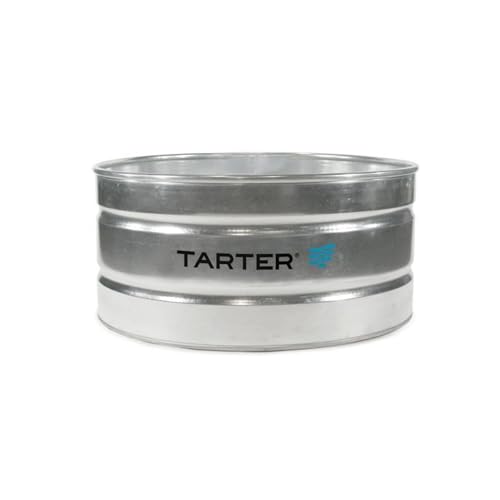
4. Tarter Round Ultra Oval Stock Tank (165 gal) — Best for Versatility
Key Spec: 165-gallon capacity
The Tarter Round Ultra Oval Stock Tank, with its 165-gallon capacity, offers a slightly different take on the popular oval design. This tank combines the benefits of an oval footprint with a robust, ultra-durable construction. It's built from heavy-duty galvanized steel, providing excellent resistance to rust, corrosion, and the wear and tear of daily ranch use. The "Ultra" designation often refers to enhanced features like thicker gauge steel or improved rim design, ensuring even greater longevity and resistance to bending. This tank is a versatile option for various applications, from providing water to a small herd to serving as a utility tub for other farm chores. Its manageable size and proven durability make it a reliable workhorse on any ranch.
Pros:
- Robust galvanized steel construction for superior longevity.
- Ultra-oval design offers good drinking access and space efficiency.
- Versatile 165-gallon capacity suitable for many uses.
- Excellent resistance to physical damage and environmental factors.
- Trusted Tarter brand quality.
Cons:
- Slightly higher price than some basic oval tanks of similar capacity.
- Still requires effort to move when empty.
| Product | Capacity (Gallons) | Material | Shape | Price | Rating |
|---|---|---|---|---|---|
| Tarter Ultra Oval Galvanized Stock Tank | 170 | Galvanized Steel | Oval | — | 4.5/5 |
| Tarter Round 390-Gallon Galvanized Stock Tank | 390 | Galvanized Steel | Round | — | 4.2/5 |
| Behlen Country Galvanized Oval Stock Tank | ~150-170 (typical) | Galvanized Steel | Oval | — | 4.5/5 |
| Tarter Round Ultra Oval Stock Tank | 165 | Galvanized Steel | Oval | — | 5.0/5 |
Frequently Asked Questions
How often should I clean a cattle water trough?
The frequency of cleaning depends on several factors, including herd size, water source quality, climate, and trough material. As a general rule, aim to clean troughs at least once a week. In hot weather, with a large herd, or if you notice algae growth or excessive sediment, you may need to clean them every 2-3 days. Clean water is crucial for preventing disease and maximizing water intake.
How much water does a cow drink per day?
An adult beef cow typically drinks between 10-20 gallons of water per day. This amount can increase significantly in hot weather, during lactation (up to 30 gallons or more), or when consuming dry feed. Factors like humidity, activity level, and the cow's physiological state all influence daily water consumption.
Can I use a stock tank heater with a galvanized trough?
Yes, stock tank heaters are commonly used with galvanized troughs to prevent water from freezing in winter. Ensure you select a heater designed for livestock use and follow all manufacturer's instructions for safe installation and operation. Always check for frayed cords or damaged units to prevent electrical hazards to your animals.
What's the main difference between galvanized and poly stock tanks?
Galvanized tanks are made from steel coated with zinc, offering superior strength, impact resistance, and longevity against rust. They are heavier and more rigid. Poly (polyethylene) tanks are lighter, more flexible, and inherently rust-proof. High-quality poly tanks are UV-stabilized and resistant to dents, but some lower-quality options can become brittle in extreme cold or degrade from sun exposure over time. Your choice depends on desired durability, weight, and specific environmental conditions.
How can I prevent algae growth in my water troughs?
Preventing algae involves a few strategies: regular cleaning is paramount. Placing troughs in shaded areas can reduce sunlight exposure, which inhibits algae growth. Some ranchers use a small amount of copper sulfate (ensure it's livestock-safe and follow dosage instructions carefully) or commercially available algae control products. Ensuring a consistent flow of fresh water, rather than stagnant water, also helps.
The Bottom Line
Investing in high-quality water troughs is a non-negotiable aspect of successful cattle management. The health, productivity, and overall well-being of your herd directly correlate with their access to clean, fresh water. By carefully considering factors like material, capacity, durability, and ease of maintenance, you can select troughs that not only meet your immediate needs but also provide reliable service for years to come.
Our top picks, such as the Behlen Country 4' Galvanized Round Stock Tank (~168 gal) for its all-around performance and the Behlen Country RE328 Galvanized Round-End Tank (294 gal) for larger operations, represent excellent choices that have proven their worth on countless ranches. The Behlen Country 6' Galvanized Round Stock Tank (~389 gal) also stands out as a premium, durable option for those seeking robust construction from a trusted brand.
Ultimately, the best water trough for your cattle in 2026 will be the one that fits your specific ranching context, herd size, and budget while prioritizing the consistent delivery of clean water. Make an informed decision, and your cattle will thank you for it with improved health and productivity.