

Ranch Approved is reader-supported. When you buy through links on our site, we may earn an affiliate commission at no extra cost to you. As an Amazon Associate I earn from qualifying purchases. How we test.
A weak fence line is a ticking clock, and your livestock know it. One downed section on a large ranch can mean days of lost work, the high cost of retrieving stray animals, and the constant worry of them getting onto a highway or a neighbor's property. Traditional low-carbon wire sags, stretches, and breaks, demanding constant maintenance that you just don't have time for. Investing in the right perimeter isn't just about keeping animals in; it's about buying peace of mind and reclaiming your time.
High-tensile wire fencing is the modern solution for large-scale ranching, offering superior strength, longevity, and lower long-term costs. We've spent hours researching the top high-tensile fencing options for 2026, focusing on what truly matters on a working ranch: durability against weather and wildlife, ease of installation over challenging terrain, and the right design for containing everything from cattle to sheep.
Our Top 5 High-Tensile Fencing Picks

The professional standard for smooth-wire fencing — a high breaking load lets you tension hard, space posts wide, and build a perimeter that lasts decades.
Check Price on Amazon →
A hot-dipped galvanized 12-gauge coil that's perfect for short runs, repairs, and bracing — rust-resistant and easy to handle without breaking the budget.
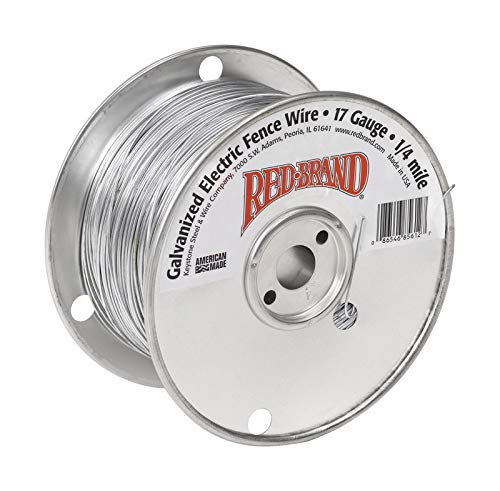
A trusted American fencing brand. This quarter-mile roll is built for electrified perimeter and cross-fencing with reliable conductivity and corrosion resistance.
Check Price on Amazon →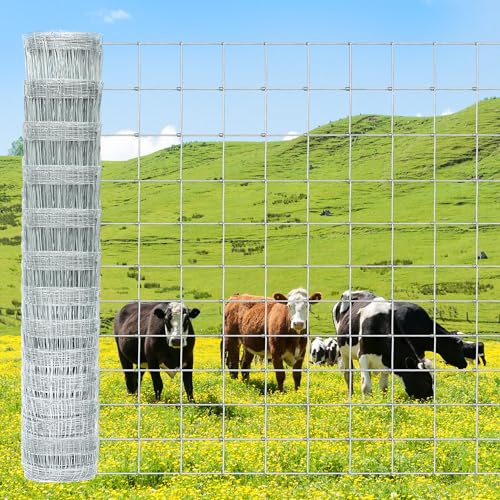
A 5 ft x 164 ft heavy-zinc woven roll that contains everything from cattle to goats and hogs while keeping predators out — the most secure all-in-one barrier here.
Currently unavailable
Class 3 zinc-coated fixed knot woven wire in a 5 ft x 328 ft roll — stops cattle, goats, and deer with a galvanized finish built to outlast lesser coatings.
What to Look For in High-Tensile Wire Fencing
Choosing the right high-tensile fence involves more than just picking a roll of wire. The type, gauge, and coating all play a critical role in how well the fence performs and how long it lasts. Here’s what to consider before you start setting posts.
Fence Type: Woven, Strand, or Barbed
High-tensile wire comes in three main configurations. Smooth single-strand wire is the most basic and cost-effective, typically installed in multiple lines (5-7 strands). It's great for interior fences and low-pressure areas. Barbed wire adds a sharp deterrent, making it a classic choice for cattle boundaries. Woven wire (or field fence) is the most secure option, featuring vertical and horizontal wires connected by knots. It's excellent for containing a mix of animals, including smaller livestock like sheep and goats, and for keeping predators out.
Wire Gauge and Tensile Strength
Gauge measures the wire's diameter—a lower number means a thicker, stronger wire. For high-tensile applications, 12.5-gauge is the industry standard, offering a breaking strength of over 1,300 pounds. While 14-gauge is a suitable and more economical option for some applications, anything higher (like 17-gauge) is generally too light for permanent livestock fencing on a large ranch. High-tensile wire is stronger than low-carbon wire of the same gauge because it has more carbon and is heat-treated, allowing it to withstand higher tension and impact without permanently stretching.
Coating and Durability (Galvanization)
Rust is the enemy of any wire fence. The wire's protective coating is crucial for its lifespan. Look for galvanization class ratings. A Class 3 galvanized coating is significantly thicker and will last 2-3 times longer than a standard Class 1 coating, especially in humid or coastal climates. Some premium wires also feature a zinc-aluminum coating (like Bezinal®) that offers even greater corrosion resistance.
Knot Type (for Woven Wire)
If you choose woven wire, the knot is critical. A hinge-joint knot is common and flexible but can slide under pressure. The superior option for high-tensile fencing is the fixed knot. This design locks the vertical and horizontal wires together, creating a rigid structure that resists pressure from animals and prevents them from forcing the wires apart. It's stronger, more durable, and the best investment for boundary fences.
Spacing and Height
Consider the type of animals you're containing. For cattle, a 48-inch tall fence is standard. For sheep, goats, or to keep out predators like coyotes, you'll want smaller openings at the bottom of the woven wire. The numbers in a woven wire description (e.g., 13-48-3) tell you the number of horizontal wires (13), the height in inches (48), and the spacing of vertical wires in inches (3). Tighter vertical spacing adds strength and security.
Installation and Maintenance
High-tensile fencing is "maintenance-free" only if installed correctly. It relies on extremely strong, well-braced corner and end posts to hold tension. Because the wire is held under high tension (around 250 lbs), you can place line posts much farther apart (30-50 feet or more) than with low-carbon wire, saving on material and labor. Once properly tensioned, it rarely needs re-stretching, but you should still perform regular walk-throughs to check for damage from fallen trees or wildlife.
Top High-Tensile Fencing Compared
1. Bekaert 12.5-Gauge High-Tensile Smooth Wire — Best Overall
Price: the current Amazon price | Key Spec: 12.5-Gauge Smooth Strand
When you want to build the strongest, longest-lasting smooth-wire fence possible, you reach for 12.5-gauge — and Bekaert is the professional standard for a reason. With a high breaking load, this wire shrugs off pressure from livestock and environmental factors like snow load or falling branches. It's sold on a large spool, offering excellent value for the long runs that come with fencing a big ranch.
Because it can be tensioned so tightly, you can significantly increase the spacing between line posts, leading to major savings in time and materials. It's the perfect backbone for main pasture divisions and boundary lines where you want maximum strength without the bulk of a woven barrier. Pair it with proper braced corner assemblies and an inline tensioner and it will stay tight for decades.
Pros:
- Professional-grade strength and durability
- Allows maximum distance between posts
- Excellent long-term value on large projects
- Stays tight with minimal re-tensioning
Cons:
- Requires proper tensioning tools and braced ends to install correctly
2. SIMBA 12-Gauge Hot-Dipped Galvanized Steel Wire — Best Budget
Price: See Amazon for current price | Key Spec: 12-Gauge, 100 ft Coil
Not every job calls for a full spool of high-tensile line. For bracing corners, splicing repairs, hanging gates, or tying off short runs, a handy coil of heavy galvanized wire is the workhorse you keep in the truck. This SIMBA 12-gauge wire is hot-dipped galvanized for genuine rust and corrosion resistance, so it holds up in humid and coastal conditions where cheaper wire fails fast.
At 100 feet it's easy to carry and easy to work by hand, and the thick zinc coating means a repair you make today won't be the spot that rusts through next season. It's the most budget-friendly pick here and earns its place as the everyday utility wire on any fencing project.
Pros:
- Very cost-effective for repairs and short runs
- Hot-dipped galvanized for strong corrosion resistance
- Easy to handle and bend by hand
- Useful across fencing, bracing, and general ranch tasks
Cons:
- Not a true high-tensile line wire for long tensioned runs
- Short 100 ft length means many coils for big jobs
3. Red Brand Electric Fence Wire (1/4 Mile) — Best for Electric Fences
Price: See Amazon for current price | Key Spec: 1/4 Mile (1,320 ft) Roll
Electrifying a high-tensile fence turns a physical barrier into a psychological one, and that means far less pressure on the wire itself. Red Brand is one of the most trusted names in American fencing, and this quarter-mile roll is purpose-built for hot-wire perimeter and interior cross-fencing. The quarter-mile length is ideal for the long, straight runs you find on big acreage.
Strung as a single hot line on insulators or as part of a multi-strand layout, it delivers reliable conductivity so your charger's power actually reaches the far corners of the pasture. For ranchers running rotational grazing or wanting to extend the life of an existing fence, a dedicated electric wire from a name you recognize is money well spent.
Pros:
- Trusted, long-established American fencing brand
- Quarter-mile roll suits long ranch runs
- Reliable conductivity for effective electrification
- Reduces physical pressure on the rest of the fence
Cons:
- Requires a fence charger, insulators, and grounding
- Not a stand-alone physical barrier on its own
4. Heavy Galvanized Field & Cattle Woven Wire Fence — Best Woven Field Fence
Price: the current Amazon price | Key Spec: Woven Wire, 5 ft x 164 ft
When you need one fence that handles mixed livestock and keeps predators out, woven field fence is the most secure answer. This heavy zinc-coated roll stands 5 feet tall and runs 164 feet, with vertical and horizontal wires forming a grid that cattle can't push through and that's tight enough at the bottom to hold goats, sheep, and hogs while deterring coyotes and deer.
The heavy galvanizing fights rust for a long service life, and the full-height grid means you don't need the multiple tensioned strands a smooth-wire fence requires. It's the go-to for working pens, lane-ways, and any boundary where a solid physical barrier matters more than maximum post spacing.
Pros:
- Secure grid contains mixed livestock and excludes predators
- Full 5 ft height needs no extra top strands
- Heavy zinc coating for a long service life
- Simple to install on standard line posts
Cons:
- Heavier and pricier per foot than smooth strand wire
- 164 ft rolls add up over very long perimeters
5. GAOMON 5FT x 328FT High Tensile Fixed Knot Field Fence — Best Fixed Knot Woven Wire
Price: See Amazon for current price | Key Spec: Fixed Knot, Class 3 Galvanized, 5 ft x 328 ft
The GAOMON fixed knot field fence brings Class 3 zinc coating — the heaviest commercial grade — to a 5-foot-tall woven wire panel that rolls out to 328 feet. Fixed knots at every wire intersection keep the mesh rigid under pressure from cattle, goats, and deer, so the fence holds its shape year after year without sagging or spreading.
Class 3 galvanizing deposits roughly three times more zinc than standard Class 1 wire, dramatically extending service life in humid, wet, or coastal ranch environments. At 328 feet per roll it covers meaningful ground per purchase, and the 5-foot height is sufficient to discourage deer from jumping while still conforming to common livestock fence heights.
Pros:
- Class 3 zinc coating for maximum corrosion resistance
- Fixed knot construction resists deformation under animal pressure
- 5 ft height deters deer as well as cattle and goats
- 328 ft roll covers substantial perimeter per purchase
Cons:
- Heavier roll requires equipment or extra hands to unroll
- Higher upfront cost than standard galvanized woven wire
Comparison Table
| Product | Price | Type | Gauge | |
|---|---|---|---|---|
| Bekaert 12.5-Ga High-Tensile Smooth Wire | the current Amazon price | Smooth Strand | 12.5 | Check Price → |
| SIMBA 12-Ga Galvanized Steel Wire | See Amazon for current price | Smooth Coil | 12 | Check Price → |
| Red Brand Electric Fence Wire (1/4 mi) | See Amazon for current price | Electric Smooth Strand | — | Check Price → |
| Heavy Galvanized Field & Cattle Fence | the current Amazon price | Woven Wire | — | Check Price → |
| GAOMON 5FT x 328FT Fixed Knot Field Fence | See Amazon for current price | Woven Wire (Fixed Knot) | — | Check Price → |
Frequently Asked Questions
What is the difference between high-tensile and low-carbon wire?
High-tensile wire has a higher carbon content and is processed differently, making it significantly stronger and less prone to stretching than low-carbon (mild steel) wire of the same gauge. This allows it to be tensioned much tighter, requiring fewer posts and less maintenance.
How far apart should posts be for high-tensile fence?
Because of its strength and high tension, line posts for a high-tensile fence can be spaced much farther apart than for a conventional fence. Depending on terrain, spacings of 30 to 50 feet are common for line posts, with some ranchers going even wider on flat ground. However, corner and end assemblies must be extremely robust to handle the tension.
Can you use high-tensile wire for horses?
Yes, but with caution. Smooth high-tensile wire is a viable option, but visibility is a major concern. It's highly recommended to use a sighter wire, like a coated wire or polytape, on the top line to ensure horses can see the fence and avoid running into it. Barbed wire should never be used for horses.
What gauge wire is best for cattle?
For high-tensile fences containing cattle, 12.5-gauge is the recommended standard for both smooth and barbed wire due to its high breaking strength. While 14-gauge can be used effectively in lower-pressure situations or for cross-fencing, 12.5-gauge provides extra security for boundary fences.
Is fixed-knot fencing worth the extra cost?
For most large ranch applications, yes. The fixed knot is substantially stronger than a hinge-joint knot. It resists pressure, prevents animals from spreading the wires, and provides a much more rigid and durable fence. The higher upfront cost is often offset by its longer lifespan and lower maintenance needs.
The Bottom Line
Upgrading to a high-tensile wire fence is one of the best long-term investments you can make for your ranch. It reduces maintenance, improves security, and provides peace of mind that your livestock are safe and secure. The key is to choose the right type of wire for your specific needs and terrain.
For an unbeatable combination of strength, longevity, and value on long runs, the Bekaert 12.5-Gauge High-Tensile Smooth Wire is our top recommendation — tension it hard, space your posts wide, and build a perimeter that lasts decades. When you need a secure barrier for mixed livestock and predator control, the Heavy Galvanized Field & Cattle Woven Wire Fence is the most complete physical fence here. And for rotational grazing or extending the life of an existing perimeter, the trusted Red Brand Electric Fence Wire turns any line into a low-pressure, low-maintenance barrier. By matching the right wire to the job, you can build a perimeter that will serve your ranch for decades to come.