

Ranch Approved is reader-supported. When you buy through links on our site, we may earn an affiliate commission at no extra cost to you. As an Amazon Associate I earn from qualifying purchases. How we test.
Proper livestock identification is the cornerstone of effective herd management. Whether you're tracking birth dates, genetics, vaccination records, or simply need to tell one animal from another in a pasture of hundreds, a reliable ear tag system is non-negotiable. A lost tag can mean a lost record, leading to confusion during sorting, breeding, and selling. A tag that's difficult to read from a distance costs you time and adds stress to both you and your animals. And a poorly designed applicator can make the whole process a frustrating, hand-cramping chore.
The market is flooded with options, from all-in-one kits to specialized tags for different animals and environments. The challenge lies in sifting through the noise to find a system that offers durability, high retention, clear visibility, and ease of application. A tag that cracks in the winter cold or fades under the summer sun is useless, and an applicator that requires brute force can lead to misplaced tags and irritated ears, increasing the risk of infection or loss.
We've been there. We've spent countless hours in the chute, fumbled with stubborn applicators, and squinted to read faded numbers from across the pen. That's why we put together this guide. We've evaluated the top ear tags and applicators on the market for 2026, focusing on the factors that matter most on a working ranch: material quality, readability, retention, and overall value. This guide will help you choose the right tools to build a dependable identification system that works as hard as you do.
Our Top 5 Quick Picks

This all-in-one kit is perfect for starting fresh or updating your system. It includes 100 numbered tags and a durable applicator, providing everything you need in one convenient package.
- The package include:001-100 cattle ear tags,1 ear tag plier,2 ear tag pins,more convenient and save time.
- Thicken cattle ear tag,laser printing,more legible and don't easy to fade.
- Ear tags was made of TPU material,durable and flexible.
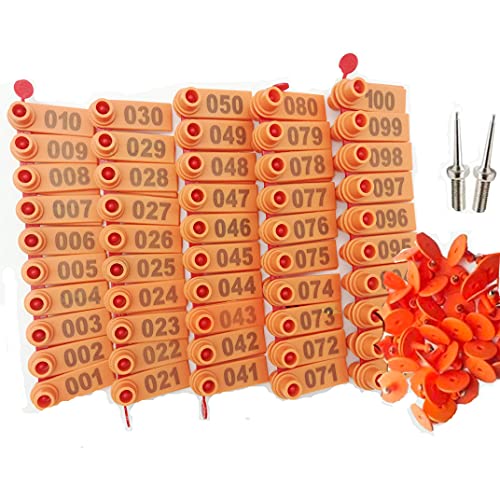
For ranchers who already own a universal applicator, this 100-pack of pre-numbered tags offers unbeatable value. The bright orange color ensures excellent visibility in the field.
- Livestock identification ear tag, ideal for the information management of livestock and animals, ear tag applicator makes ear tag placement…
- Orange 001-100 sheep ear tags,2 ear tag pins.goat tag kit,more convenient and save time.Used for poultry Livestock The signboard of the ran…
- High quality material, cold resistant, heat resistant, digitally clear, not easy to fade, durable and flexible.

These blank tags offer complete flexibility to implement your own custom numbering system. They are ideal for operations that track specific data like birth year, sire, or lineage.
- DURABLE MATERIAL: The ear tags for calves are made of quality plastic, fade resistant, softer, more flexible, durable and will withstand ex…
- PERFECT FIT: You can use your standard installers to insert these livestock ear tags; pins are included;
- FUNCTION WELL: Cattle ear tags blank are a must for cattle/sheep ranchers, it helps you track your herd, great for use in calves, beef catt…

Designed for seamless use with Z Tags, this 1-piece applicator ensures quick and easy tag loading, minimizing hassle during application. Its robust design offers reliability for busy ranch operations.
- Flip Out Pin
- Lightweight
- Made From Durable Material

For ranchers needing a robust and versatile tool, this heavy-duty applicator offers reliable performance across various 2-piece ear tag brands. Its durable construction ensures consistent, secure tag application even in demanding conditions.
- Smooth Application - The Allflex UTT3S ergonomic ear tag applicator requires minimal force, reducing hand fatigue during livestock tagging,…
- Universal Fit - Lightweight & durable with one pin, this ear tag tool supports multiple Allflex tags, including two-piece tags, electronic…
- Safety & Efficient - Designed to reduce pinch points and minimize animal startle reflex, the UTT3S automatic applicator operates quietly, e…
Comparison Table
| Product | Best For | Price | Why we picked it |
|---|---|---|---|
| Cattle Ear Tags & Tagger Installer Kit | Best Overall | ~$26.96 | This all-in-one kit is perfect for starting fresh or updating your system. It includes… |
| Livestock Numbered Ear Tags (001-100) | Best Budget | ~$12.99 | For ranchers who already own a universal applicator, this 100-pack of pre-numbered tags… |
| Blank Write-On Ear Tags (100 Pack) | Best for Customization | ~$19.98 | These blank tags offer complete flexibility to implement your own custom numbering… |
| Z Tags 1-Piece Applicator for Easy Loading of Tags | Editor's Pick | ~$34.64 | Designed for seamless use with Z Tags, this 1-piece applicator ensures quick and easy tag… |
| Allflex UTT3S 2-Piece Universal Ear Tag Applicator for Livestock | Best Heavy-Duty | ~$59.45 | For ranchers needing a robust and versatile tool, this heavy-duty applicator offers… |
What to Look For in Ear Tags & Applicators
Choosing the right ear tag system goes beyond just picking a color. Several key factors determine whether your tags will stay in, remain legible, and make your life easier. Here’s what to consider before you buy.
Tag Material and Durability
The vast majority of modern ear tags are made from Thermoplastic Polyurethane (TPU). This material is prized for its flexibility, strength, and resistance to the elements. A good TPU tag will bend without breaking if it gets snagged on a fence or feeder, reducing the chance of it being ripped out. Look for tags that are specifically marketed as being UV-resistant to prevent them from becoming brittle and cracking under sun exposure. For those in northern climates, cold-weather resistance is crucial, as some plastics can become stiff and shatter in freezing temperatures.
Readability and Identification Method
The primary purpose of a tag is identification, so readability is paramount. You have two main choices: pre-numbered tags or blank tags. Pre-numbered tags are convenient and feature laser-etched or hot-stamped numbers that are highly resistant to fading. Blank tags offer the ultimate flexibility, allowing you to create your own custom numbering system that might include a year code, sire code, or sequential number. If you choose blank tags, invest in a high-quality, fade-proof tag marking pen. Also, consider tag color. Many ranchers use a color-coding system—for example, a different color for each birth year—to allow for quick visual sorting from a distance.
Tag Type and Retention Rate
Ear tags generally come in one-piece or two-piece designs. One-piece tags fold over and lock onto themselves, while two-piece tags consist of a female panel (the part with the number) and a male stud that pierces the ear and locks into the female side. Two-piece tags are the industry standard for cattle as they tend to have better retention rates. The design of the tag's "neck" and the locking mechanism of the stud are critical for retention. A well-designed tag will allow for free rotation and movement, preventing it from getting caught and torn out. Always ensure the male and female components are from the same manufacturer for a secure fit.
Applicator Design and Ergonomics
The applicator is just as important as the tags themselves. A poorly designed applicator can make tagging a miserable chore and lead to improper tag placement. Look for an applicator with an ergonomic grip that reduces hand fatigue, especially if you have a lot of animals to process. A deep jaw makes it easier to get proper placement deep in the ear. Some applicators feature a "flip-out" pin, which automatically retracts after application to prevent tearing the ear. Most importantly, match your applicator to your tags. While some "universal" applicators exist, using an applicator designed specifically for your brand of tags ensures the pin aligns perfectly and applies the correct amount of pressure, preventing damaged tags and sore ears.
Animal Type and Tag Size
Ear tags are not one-size-fits-all. A large cattle tag is too heavy and bulky for a sheep or goat, while a small sheep tag would be nearly impossible to read on a mature cow from any distance. Ensure you are buying the appropriate size tag for the type of livestock you are managing. For cattle, larger tags offer better visibility in the pasture, which is a significant advantage for daily monitoring without having to bring animals into the chute.
Top Picks Compared
1. Cattle Ear Tags & Tagger Installer Kit — Best Overall
Key Spec: Complete 202-piece kit
For anyone starting a new herd, overhauling their identification system, or simply looking for maximum convenience, this all-in-one kit is an outstanding choice. It removes the guesswork of matching tags to an applicator by providing everything you need to get started right out of the box. The kit includes 100 two-piece tags, sequentially numbered from 001 to 100, and a sturdy metal applicator.
The tags themselves are made from a durable, flexible TPU material designed to withstand harsh weather conditions. The numbers are laser-etched for long-term visibility, ensuring they won't fade after a season in the sun. The included applicator is a universal style with a comfortable grip and a locking mechanism for safe storage. It also comes with a spare pin, which is a thoughtful addition. This kit offers exceptional value, saving you the time and potential hassle of purchasing components separately.
Pros:
- Complete kit includes 100 numbered tags, applicator, and a spare pin
- Laser-etched numbers for excellent fade resistance
- Great value compared to buying items separately
- Durable and flexible tag material
Cons:
- Applicator may not be as heavy-duty as premium, brand-specific models
2. Livestock Numbered Ear Tags (Orange) — Best Budget
Key Spec: 100 pre-numbered tags
If you already have a reliable universal applicator and just need to stock up on tags, this 100-pack is the most cost-effective solution we found. These tags deliver the essentials without the frills, making them perfect for large-scale operations where budget is a key consideration. The pack comes with tags numbered 001-100, ready for immediate use.
The bright orange color provides excellent visibility against most coat colors, making it easy to spot specific animals in a group. The numbers are large, bold, and laser-printed for good longevity. Made from standard TPU, they offer adequate flexibility for most conditions. While they may not have the premium feel of more expensive brands, they get the job done at a fraction of the cost, proving that effective management doesn't have to break the bank.
Pros:
- Extremely budget-friendly price per tag
- Bright orange color for high visibility
- Clearly printed, large numbers
- Compatible with most standard universal applicators
Cons:
- Material may not be as thick or durable as premium-priced tags
3. Blank Write-On Ear Tags (Green) — Best for Customization
Key Spec: 100 blank tags
For the rancher who needs more than just a sequential number, these blank write-on tags are the ideal canvas. They provide complete freedom to implement a detailed, custom identification system. You can add birth year, sire information, dam number, or any other data point that is critical to your operation's record-keeping. This level of customization is invaluable for tracking genetics and making informed breeding decisions.
This 100-pack of green tags is made from a quality TPU material that holds marking ink well. The large, smooth surface provides ample space for writing. The green color offers good contrast for black ink and stands out in the pasture. To get the most out of these tags, it is essential to pair them with a dedicated ear tag marking pen designed to resist fading from UV light and moisture.
Pros:
- Total flexibility for custom numbering and data
- Large surface area for writing
- Durable material that resists tearing
- Good value for a 100-pack
Cons:
- Requires separate purchase of a quality marking pen
- Handwritten numbers can fade over time if a poor-quality pen is used
4. Blank Write-On Ear Tags (Blue) — Best for Color Coding

Key Spec: 100 blank blue tags
Functionally similar to the green blank tags, this blue version is our top pick for ranchers who rely on color coding for at-a-glance herd management. Using a different color for each calving year is a common and highly effective strategy. For example, you could use blue for 2026 calves, green for 2025, and so on. This allows you to instantly identify an animal's age class from a distance without needing to read the number, which is a massive time-saver when sorting or making culling decisions.
Like their green counterparts, these tags offer a large, blank surface ready for your custom numbering system. The vibrant blue provides a strong background for black or white marking ink. They are constructed from the same flexible and durable TPU, ensuring they can handle the rigors of life on the ranch. Combining these with other colors allows for a sophisticated, multi-layered identification system.
Pros:
- Ideal for implementing a color-coded management system
- Offers the same customization benefits as other blank tags
- Strong, flexible material for good retention
- Vibrant color is easy to spot
Cons:
- Like all blank tags, legibility depends on the quality of the marking pen and handwriting
5. Large Numbered Livestock Ear Tags (Purple) — Best for High Visibility

Key Spec: 50 large-format tags
When you need to identify an animal from the other side of the pasture or from the seat of a tractor, visibility is everything. These large-format purple tags are designed specifically for that purpose. The oversized panel combined with large, contrasting white numbers makes them exceptionally easy to read from a distance. This is a significant benefit for reducing stress on animals, as it minimizes the need to crowd them for identification.
The unique purple color also stands out clearly in any environment and against any hide color. The pack contains 50 tags, numbered sequentially. While the cost-per-tag is higher than our budget pick, the superior visibility can be well worth the investment for key animals like herd bulls, replacement heifers, or any group that requires frequent long-distance monitoring.
Pros:
- Excellent long-distance readability due to large size and bold numbers
- Distinctive purple color for easy spotting
- Durable construction with a reinforced neck to improve retention
Cons:
- Higher cost per tag
- Comes in a 50-pack instead of the more common 100-pack
Frequently Asked Questions
What is the best numbering system for cattle?
An effective numbering system should be simple, logical, and unique. A popular method is to use the first digit to represent the birth year (e.g., '6' for 2026) followed by a sequential number for the calf's birth order (e.g., 6001, 6002). This instantly tells you the animal's age. To avoid duplication, it's recommended that a numbering sequence not be repeated for at least 10 years, which is the typical productive lifespan of a cow.
How do I prevent ear tags from falling out?
Proper application is the single most important factor for tag retention. The tag should be placed in the middle third of the ear, between the two main cartilage ribs. Placing it too low or too high on the edge increases the risk of it getting snagged and torn out. Always use a sharp, clean applicator pin and ensure you are using the correct applicator for your brand of tags to get a secure lock.
Which ear should I tag my livestock in?
There is no universal rule, but many producers follow a system. A common practice is to place management tags in the animal's right ear and official identification tags (like RFID or government program tags) in the left ear. Some ranchers tag heifers in the right ear and bull calves in the left. The most important thing is to be consistent across your entire herd.
Can I reuse ear tags?
It is strongly advised not to reuse ear tags. Removing a tag damages its locking mechanism, meaning it will not be as secure if reapplied. More importantly, reusing tags carries a significant risk of transferring blood-borne diseases, such as anaplasmosis or bovine leukosis virus, from one animal to another. Always use a new, sterile tag for each animal.
What's the difference between major brands like Allflex and Y-Tex?
Allflex and Y-Tex are two of the leading manufacturers of livestock identification products. While both produce high-quality tags, their main difference lies in their two-piece tag design and corresponding applicators. An Allflex tag generally requires an Allflex applicator, and a Y-Tex tag requires a Y-Tex applicator. Their locking mechanisms and applicator pins are not interchangeable. Mixing and matching can result in damaged tags, torn ears, and poor retention.
The Bottom Line
A reliable ear tag system is a small investment that pays huge dividends in organization, efficiency, and peace of mind. Your choice will depend on the specific needs of your operation, but our top picks for 2026 offer a solution for every scenario.
For a seamless, all-in-one solution, the Cattle Ear Tags & Tagger Installer Kit is our top recommendation. It provides everything you need to tag 100 head of cattle with durable, easy-to-read tags. If you're looking to maximize flexibility and implement a custom numbering system, the Blank Write-On Ear Tags are an excellent choice, especially when combined with a color-coding strategy. Finally, for pure value, the Livestock Numbered Ear Tags allow you to stock up on quality, visible tags at an unbeatable price.
Whichever system you choose, remember that proper application is just as crucial as the quality of the tag itself. By selecting the right tools and following best practices, your tags will stay secure and legible, providing the critical data you need to manage your herd effectively for years to come.