Ranch Approved is reader-supported. When you buy through links on our site, we may earn an affiliate commission at no extra cost to you. We only recommend products we have thoroughly researched and believe will genuinely help ranchers and farmers. How we research.
A reliable Utility Task Vehicle (UTV) is the workhorse backbone of every modern ranch operation. Whether you are checking fencelines in the back forty, hauling square bales to calving pens, or navigating spring mud, an unexpected breakdown brings chores to a dead halt. While major powertrain failures warrant a trip to a certified mechanic, 90% of field breakdowns can be prevented with regular, proactive maintenance.
Quick Ranch UTV Maintenance Checklist
Scanning this guide on your phone out in the pasture? Here is your field-ready preventative maintenance schedule at a glance:
| Interval | Component | Action Required | Field Recommendation |
|---|---|---|---|
| Daily / Pre-Ride | Engine Oil & Tires | Inspect dipstick on level ground; inspect tire tread for mesquite thorns or sidewall cuts | Cold tire pressure: 10–14 PSI |
| Every 25 Hours | Air Induction | Tap out loose pasture dust from pre-cleaner; inspect airbox seal for bypass grit | Never blow paper filters with high-PSI air |
| Every 50 Hours | Suspension Zerks | Purge old grease from A-arms, ball joints, sway bar bushings, and drive slip yokes | Marine Grease |
| Every 50–75 Hours | Engine Oil & Filter | Drop crankcase oil, replace OEM filter cartridge, refill with extreme-duty off-road synthetic | 5W-50 Synthetic Oil |
| Every 100 Hours | CVT Drive Belt | Remove clutch cover; check for cord fraying, hourglassing, and glazing; blow out clutch dust | Always carry spare belt in under-seat box |
| Seasonal / Mud Season | Cooling System | Gently flush mud and weed seeds from radiator fins back-to-front using low-pressure garden hose | Inspect coolant freeze rating & reservoir |
| Field Emergency Kit | Tire Repair Kit | Keep vulcanized tire plugs, insertion tools, and 12V mini air compressor stored on-board | Tire Plug Kit |
Considering a new workhorse machine or comparing utility models? Check out our companion field guide: Best UTV/Side-by-Side for Ranch Work in 2026: Top Picks Compared, where we analyze payload capacities, suspension durability, and diesel vs. gas engines across Polaris, Can-Am, Kubota, and Honda.
1. Engine Oil & Filter: The Calving Season Lifeline
Ranch operating conditions are brutal on internal combustion engines. Endless idling while opening wire gates, stop-and-go pasture crawling, heavy low-gear towing, and choking dust accelerate oil breakdown significantly faster than weekend trail riding.
- Check Oil Level Weekly: Always inspect the dipstick with the machine parked on level ground before starting chores. Ensure the level sits precisely between the add and full marks. Look closely for signs of fuel dilution (thin, strong gas odor) or milky discoloration, which indicates coolant leaking past a head gasket or water pump seal.
- Service Intervals: Never exceed 50 to 75 operating hours between oil changes under severe-duty ranch conditions, regardless of factory manual claims of 100+ hours. Low speeds and prolonged idling allow unburned fuel and moisture to contaminate the crankcase oil.
- Use Off-Road Synthetic Formulations: Heavy cargo bed loads generate severe cylinder head temperatures. Run a full synthetic 5W-50 or 10W-40 formulated with high zinc (ZDDP) content for wet-clutch and extreme-pressure protection. Generic passenger car oils lack the shear stability and anti-wear additives necessary for high-RPM powersports engines.
Engineered specifically for extreme off-road heat, heavy low-gear hauling, and severe ranch dust. Polaris PS-4 delivers film strength protection from -40°F winter cold snaps to 100°F+ summer haying, with high-zinc anti-wear additives that prevent cam scuffing and ring wear during grueling chore work.
2. Air Induction: Stop Dust Before It Destroys Cylinders
Fine dust from gravel ranch roads, feed alleys, and dry pastures is the number one cause of premature UTV engine death. Once dirt bypasses the air filter, it turns into an abrasive lapping compound that strips piston rings and ruins cylinder cross-hatching in just a few dozen hours.
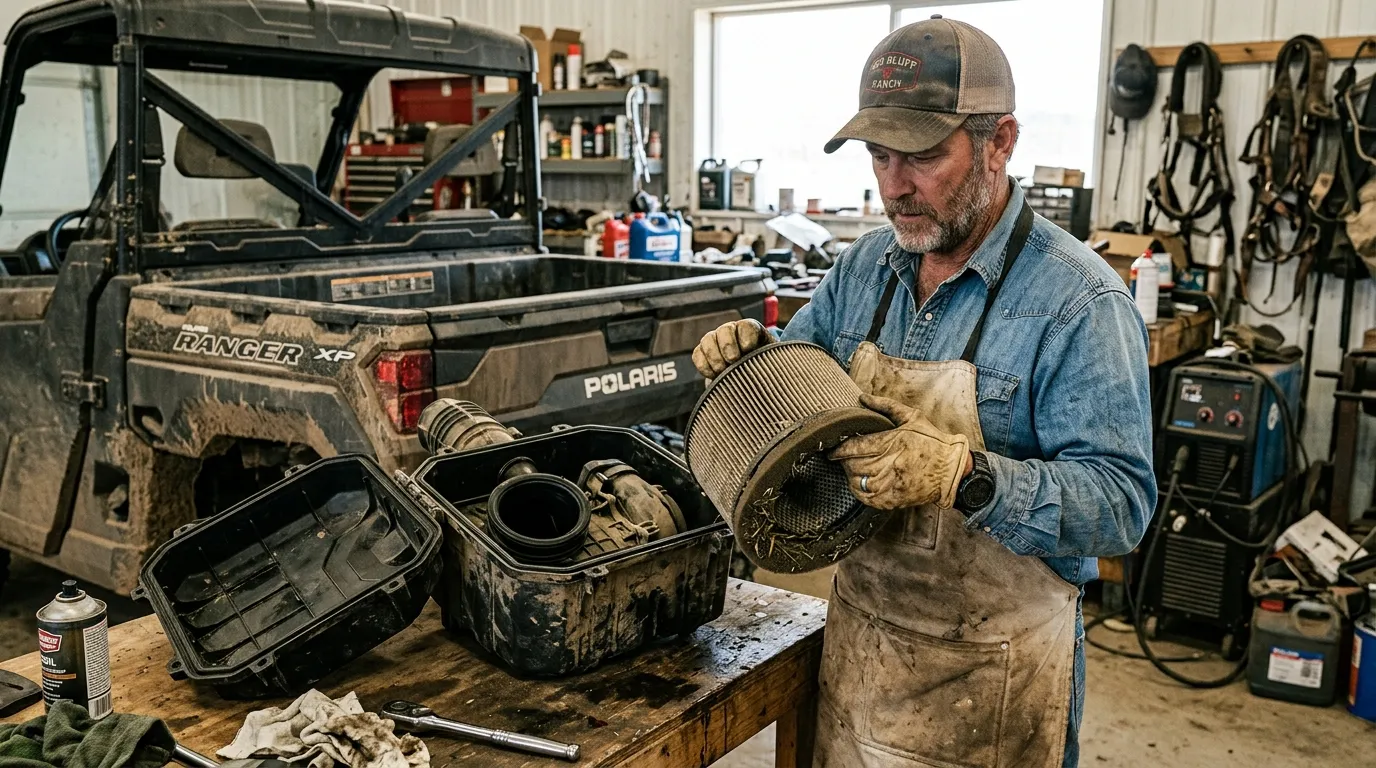
- Inspect Foam Pre-Filters Monthly: Wash foam pre-cleaners with mild soap and warm water during dusty summer months, allow them to air dry thoroughly, and apply a light tacking of specialized foam filter oil before reinstalling.
- Never Blow Out Paper Elements with High-Pressure Shop Air: Using an air nozzle at 90 PSI blows microscopic pinholes straight through delicate paper filter pleats. While the filter looks clean to the naked eye, those pinholes allow abrasive silica dust straight into the throttle body. Tap paper cartridges gently against a workbench to shake out loose chaff, or replace them once dirty.
- The White Shop Rag Test: Whenever you pull the air filter, wipe the intake tube between the filter box and throttle body with a clean white shop rag. If there is any fine dust residue on the rag, your filter or airbox seal has failed and needs immediate resealing.
3. CVT Drive Belt Care & Inspection
Most utility work machines—including the Polaris Ranger, Can-Am Defender, CFMOTO UForce, and Kawasaki Mule PRO—utilize Continuously Variable Transmissions (CVTs) driven by a heavy-duty reinforced rubber belt.
- Always Shift into Low Gear for Chores: The #1 cause of glazed, grooved, or snapped CVT belts is towing, plowing, or crawling in High gear. If you are traveling under 15 MPH, towing a trailer, or carrying heavy feed loads up pasture grades, shift down to LOW. High gear creates clutch slippage that scorches the belt rubber.
- Inspect for Hourglassing & Cog Cracking: Remove the outer clutch cover every 100 hours. Inspect the belt sidewalls for glazing (a hardened, slick shine), missing teeth, and hourglass waist spots caused by spinning the engine while the vehicle was stuck in mud.
- Blow Out Clutch Dust: Use dry, low-pressure compressed air (under 30 PSI) to blow out accumulated belt dust from inside the primary drive clutch and secondary driven clutch sheaves.
- Carry a Spare Belt and Clutch Tool: Never leave the farmstead without a spare OEM-quality drive belt and the clutch spreader tool tucked into your under-seat storage box. A snapped belt miles from the barn turns a 5-minute fix into an expensive towing headache.
4. Chassis Lubrication: Grease the Zerks
Modern ranch UTVs have dozens of articulating pivot points—front and rear independent A-arms, upper and lower ball joints, sway bar bushings, and driveshaft slip yokes. Driving through deep creek crossings, cattle mud bogs, and high-pressure washdowns quickly washes out factory grease, allowing abrasive sand and grit to grind away metal sleeves.
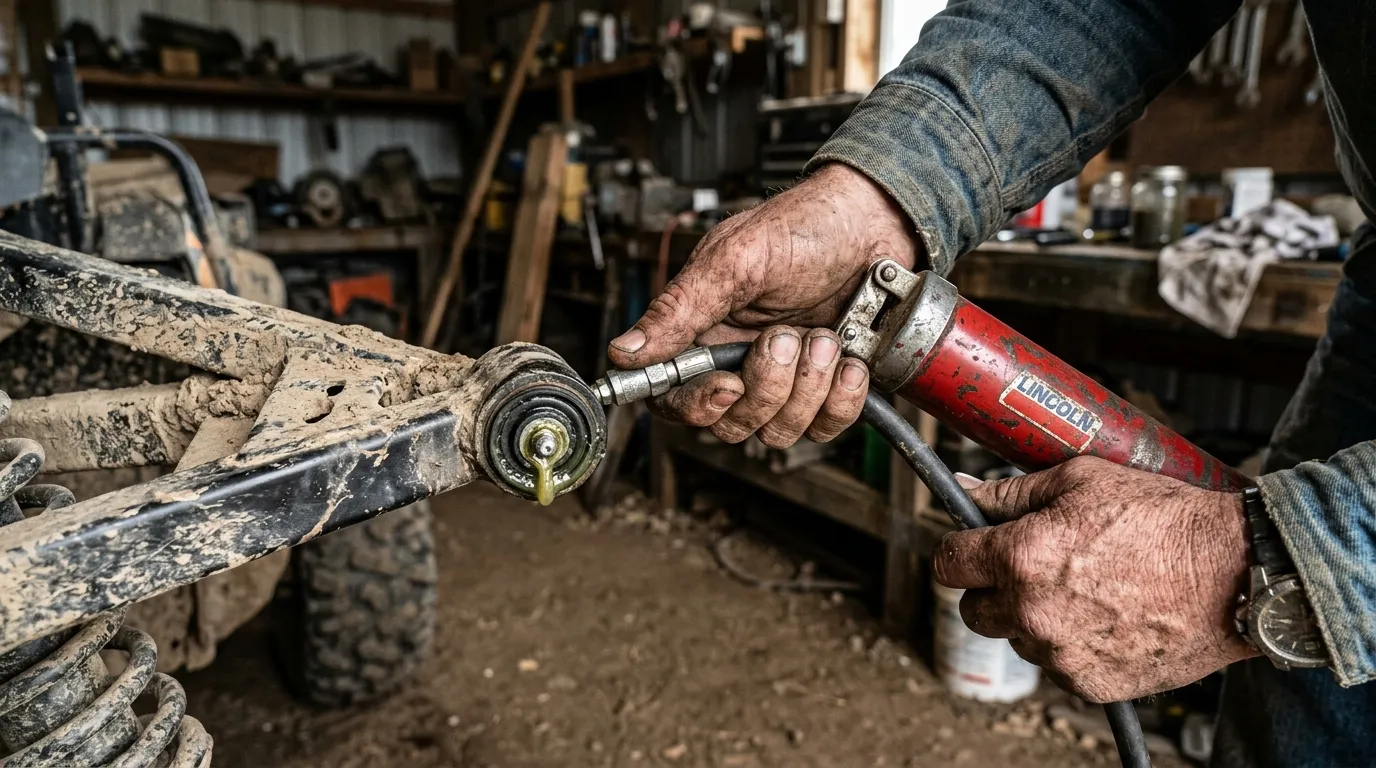
- Locate Every Grease Zerk: Most utility side-by-sides feature between 8 and 18 grease fittings across the chassis. Check your service manual diagram to ensure you don’t miss hidden zerks on the inner A-arm pivots or rear stabilizer links.
- Wipe Zerks Clean Before Greasing: Always wipe dirt and dried mud off the zerk nipple with a rag before attaching your coupler. Snapping a grease coupler over a dirty zerk forces grit straight into the precision bushing.
- Use Marine-Grade Water-Resistant Grease: Standard automotive chassis grease washes away the first time you cross water. Calcium sulfonate or lithium-complex marine water-resistant grease stays adhered inside bushings, preventing rust and repelling muddy pasture water.
- Pump Until Fresh Grease Purges: Pump the grease gun until you see fresh, clean grease push past the rubber dust boot seals, expelling trapped moisture, sand, and old contaminated grease.
The one-handed pistol grip design lets you hold the flexible hose coupler squarely on tight A-arm zerks while pumping up to 7,500 PSI. Paired with Lucas 10320 Marine Water-Resistant Grease, this setup forms an impenetrable barrier that resists wash-out in creek crossings and muddy calving pens.
5. Tire Integrity & Bead Pressure
UTV tires operate at low inflation pressures (typically 10 to 14 PSI) to provide a wide ground contact patch and cushion rough pasture ruts.
- Check Cold Pressure Regularly: Under-inflation leads to pinched sidewalls on rocks and blown tire beads under heavy bed loads. Over-inflation creates a jarring, tooth-rattling ride and compromises traction on wet clay hillsides.
- Inspect for Mesquite Thorns and Wire: Inspect your tread blocks and sidewalls after clearing pastures or driving along fence lines. Mesquite thorns and old fencing wire often create slow leaks that leave you with a flat tire the following morning.
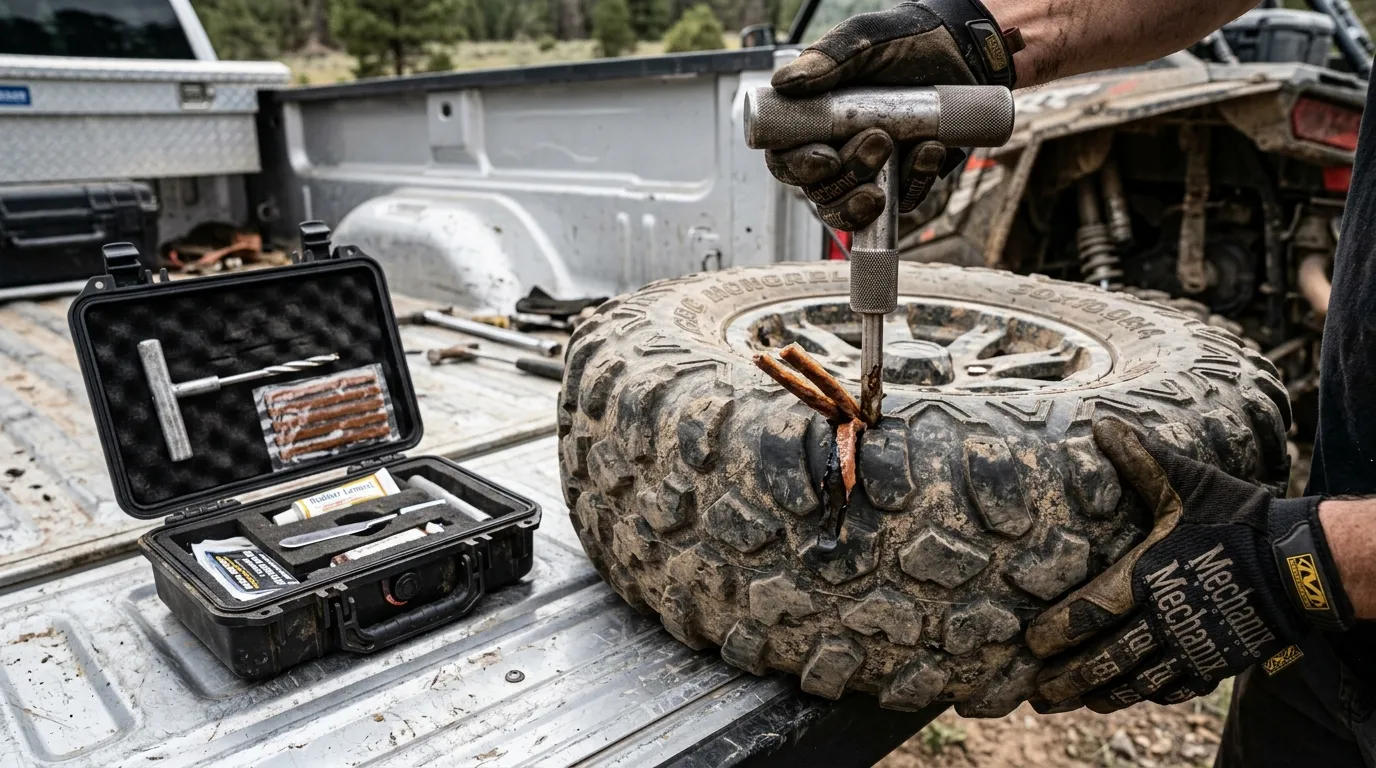
- Pack a Professional Tubeless Tire Plug Kit: Never rely on cheap plastic plug tools that bend or break when pushing through stiff 6-ply or 8-ply radial off-road carcasses. A heavy-duty kit with forged steel T-handles, vulcanized rubber strings, and vulcanizing rubber cement lets you plug punctures in five minutes right in the pasture without pulling the tire off the machine.
Built with solid forged-steel T-handles that will not snap in tough 8-ply UTV tires. Includes 30 extra-sticky brown vulcanized tire plugs, insertion lube, spiraled reamer, insertion needle, and replacement valve cores inside a rugged hard-shell case that fits under any UTV seat.
6. Cooling System & Radiator Care
Hauling feed tons and pulling trailers places high thermal loads on your cooling system. Mud caked into radiator fins acts like an insulating blanket, causing rapid engine overheating in the middle of summer pasture runs.
- Gently Flush Radiator Fins: After working in heavy mud or mowing tall pasture grass, flush the radiator core with a standard low-pressure garden hose from the back (engine side) toward the front. Never use a high-pressure pressure washer, which immediately bends aluminum radiator fins flat and permanently ruins heat dissipation.
- Check Coolant Level and Freeze Protection: Inspect the translucent overflow reservoir when the engine is completely cold. Top off with 50/50 ethylene-glycol prediluted powersports coolant to prevent water pump cavitation and preserve sub-zero winter freeze protection.
- Check Radiator Cap Seal: Inspect the rubber gasket on your radiator pressure cap once a year. A worn cap fails to hold 13–15 PSI system pressure, allowing coolant to boil over at lower operating temperatures.
Building a Consistent Ranch Maintenance Habit
Preventative maintenance on a ranch UTV doesn’t require complex tools or hours of shop time. Setting aside 30 minutes every couple of weeks to check your dipstick, tap out the air filter pre-cleaner, and grease the suspension pivot zerks will save thousands of dollars in mechanical repairs. Keep a basic kit—synthetic 5W-50 oil, a grease gun loaded with marine grease, a spare drive belt, and a solid tire plug kit—stowed in your ranch shop so your machine is always ready for chore time.